
Three names go to the board. Somebody searches all three that evening.
When a board is handed three names by a director, a lawyer or an engineer, the first thing somebody does is look those three names up. What they find decides who receives the package. A firm that is invisible, or that shows a 3.2 average built from eleven tenant complaints, loses at that stage - before any proposal is read, and without ever learning it was in contention.
Reviews and the record first · Your boards are never my prospects
Condominium management firms that win work by shortlist.
I make sure the firm a board looks up that evening is the one it expected to find: a rating that reflects the owners you serve, a record of every call and form, and a desk that answers when you cannot.
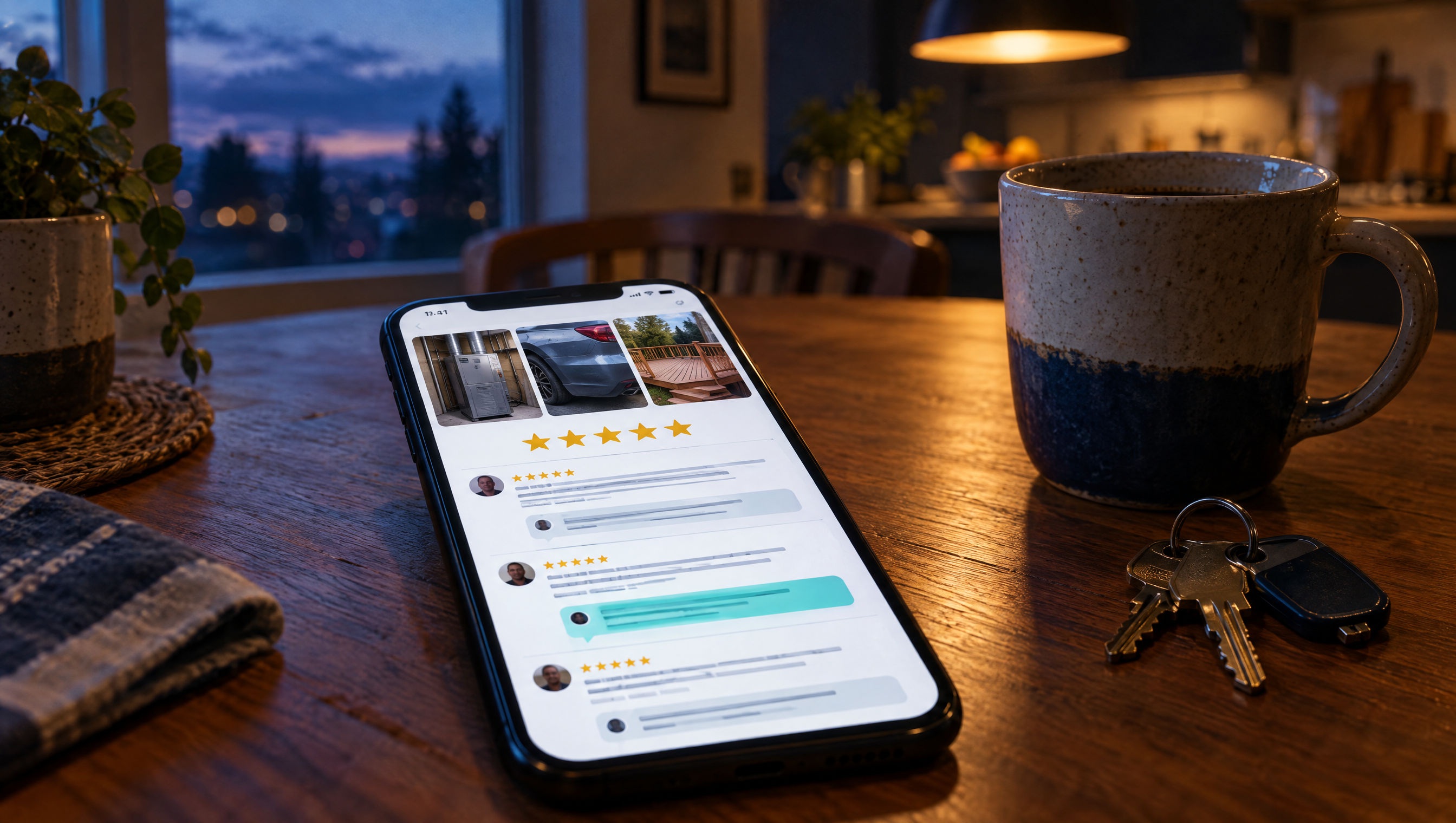
If somebody has told you that ranking wins board work, they have not sold to a condominium firm. You already know how you get work: referrals, reputation, and an RFP run through a selection committee. What I am selling on this track is the thing that stops you being quietly removed from a list you never saw.
The due diligence happens before anybody meets anybody.
What a shortlisting board checks
Public reviews and rating. How long the firm has managed their type of property. How many properties it currently manages. Licensing status. Named references. Manager tenure and client retention.
What answers that list
The review work inside The Pin answers the rating. The record inside The Foundation answers retention and responsiveness with numbers instead of adjectives. The profile work makes sure the search finds you rather than a stale directory listing from four years ago.
The season is real and it is short
Board work runs on a cycle - budget months, meeting months, renewal months. During meeting season I hold a real date and come back on it rather than pushing. Renewal season is the best month of the year in both directions.
The rule that protects the relationship
Once a management firm is my client, its boards are not my prospects. A board that approaches me goes back to the manager first, in writing. It is in the agreement, not only on this page.
Reviews and the record carry it. Visibility is defensive.
The steps are the same on every track - The Pin, then The Foundation. What changes on the condominium side is where the weight sits inside them.
The reviews
The rating is the first thing checked and the cheapest thing to lose on. The people most motivated to review a management firm are not the people who pay it - a resident with a complaint writes four paragraphs, a satisfied owner writes nothing. Eleven reviews means one bad month defines you. A hundred and forty means it does not.
The record
Retention and responsiveness are on every board’s list and almost nobody can answer them with a number. A monthly report written to be tabled at a board meeting without editing turns your strongest argument from an adjective into evidence. How that is evidenced.
Visibility
Defensive, on this track. The search has to find your firm rather than a stale directory listing, a wrong phone number, or nothing at all. Worth doing, and worth being honest that on this track it is not the lead. How visibility is built.
The desk
The after-hours contact from a resident, logged and routed on your escalation order. Administrative only, and the limits are below. How the desk works.
The desk routes to a licensed manager and stops.
- Answers from the corporation’s or the firm’s own documents
- Triages against criteria you set, not criteria I assume
- Logs every contact with a timestamp in and a timestamp answered
- Routes anything real to a licensed manager on your escalation order
- Books owner enquiries into your calendar
- It does not interpret a declaration
- It does not decide common element versus unit
- It does not commit the corporation to a dollar
- It does not touch another owner’s file
- It does not put dates on statutory processes
- It does not accept service of anything
Where a jurisdiction licenses management - the CMRAO in Ontario, equivalents elsewhere - the desk routes to a licensed manager and stops. It does not perform, and is never presented as performing, any function requiring a licence.
Board work is regional, and so is the search that follows a shortlist. The cities I build in are written up one by one, and the record answers the retention and responsiveness questions a selection committee actually asks.
Answered plainly.
Does Google ranking win condominium management contracts? +
What does a board actually check before it sends a package? +
My rating is low because of tenant complaints. Can that be fixed? +
Can an intake desk touch condominium work without breaching CMRAO rules? +
What does it cost? +
If you work with my firm, will you approach my boards? +
Find out what a board sees when it looks you up.
On a nine-minute call I will read you your public rating against the firms you compete with for packages, what your listing shows a director searching at nine at night, and what I would fix first.
or call 647-242-5800